
The AI Co-Founder Your Small Business Needs


The AI Co-Founder Your Small Business Needs
I was looking at a new GoDaddy survey and one number jumped right off the page: 43% of small business owners using generative AI are saving more than 10 hours a week. Let that sink in. That’s not some vague promise about the future; that's happening right now. For years, I’ve treated technology as a tool. A hammer. A spreadsheet. But these new AI platforms feel different. They feel less like a tool and more like a co-founder - a tireless, data-driven partner you can afford from day one.
Where the Real Money is Made with AI
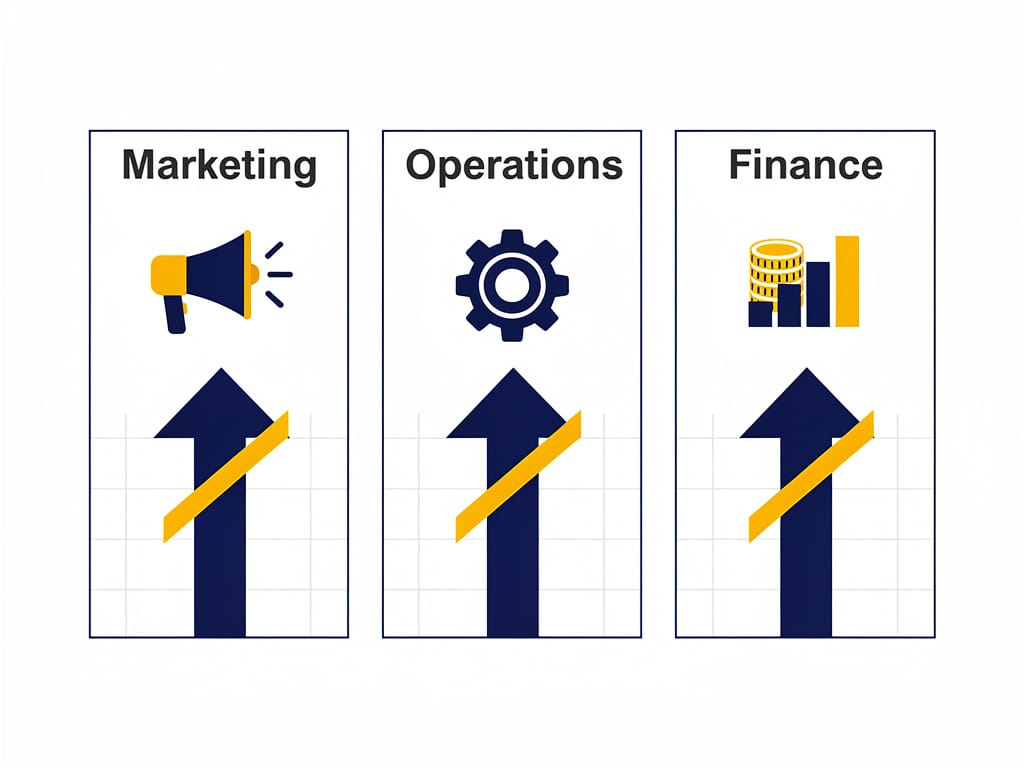
So, where does this partner actually add value? Let's start with marketing. I saw a HubSpot report showing that businesses using AI for content creation saw a 30% average increase in lead generation. This isn't just an abstract percentage. If your business brings in $200,000 in revenue from new leads, a 30% lift is an extra $60,000. That’s not a rounding error; that's enough to hire a new employee or fund a major expansion. And it comes from letting an AI help draft emails, social media posts, and blog ideas.
But it's not just about getting more customers; it's about serving them better and cheaper. Look at customer support. The data from Intercom, a major player in this space, shows their AI chatbots now resolve 69% of common customer questions without any human help. I did the math on this for a small e-commerce shop. If you pay a support agent $22 an hour and they spend 25 hours a week on routine questions, that's $28,600 a year. An AI handling nearly 70% of that workload just put almost $20,000 back into your pocket.
The Data Doesn't Lie: Key AI Wins
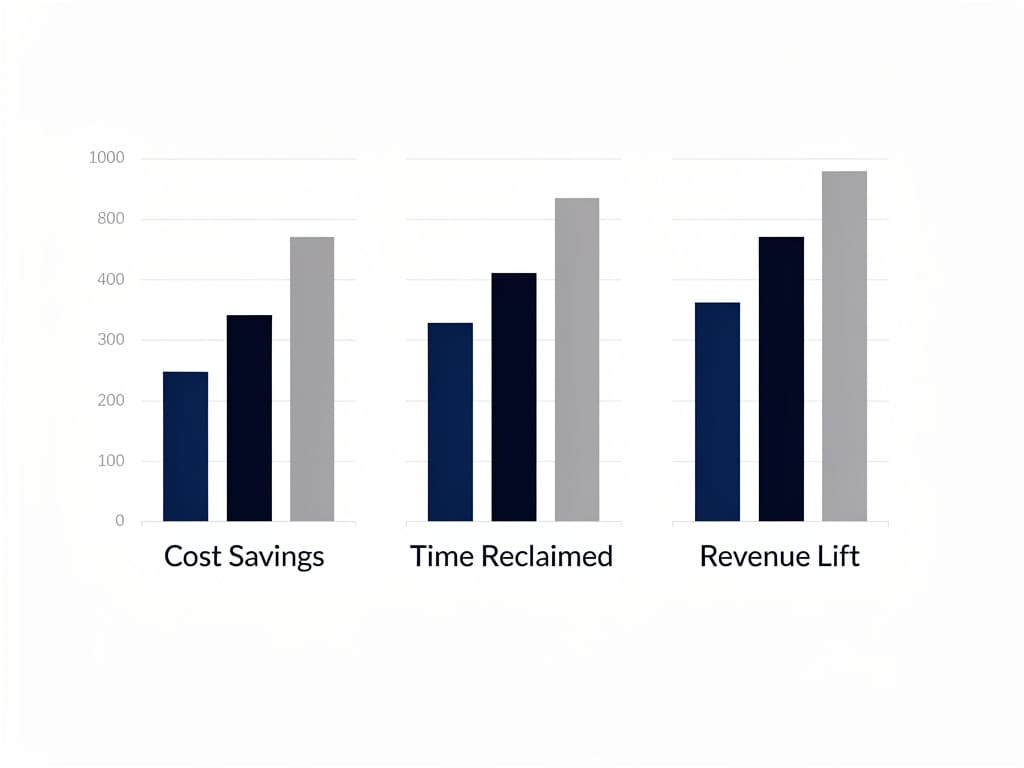
When I’m looking at an investment, I want to see the hard numbers. The story is nice, but the data is what matters. And the data on AI for small businesses is compelling. I've been tracking this, and a few points stand out:
- Productivity gains are real. A Stanford University study found that access to a generative AI assistant increased agent productivity by 14% on average, with the biggest impact on new and lower-skilled workers.
- It's surprisingly affordable. The average salary for a junior marketing hire in the U.S. is now over $45,000 per year plus benefits. My core AI software stack for content, images, and research costs me less than $1,200 annually.
- Decision-making gets sharper. According to a study by MIT, managers using AI-powered recommendations made business decisions that were 37% more profitable than those made without AI assistance.
Now, I have to be straight with you - this is not a set-it-and-forget-it solution. This AI co-founder can be brilliant, but it can also be confidently wrong. Some research I've seen on large language models shows an error rate, or 'hallucination' rate, of up to 3% on factual queries. That sounds small, but it means you absolutely must have a human in the loop to verify the output. You are the CEO, not the assistant.
My Takeaway: The Co-Founder You Hire, Not Abdicate To
So, what's the bottom line? I see this as hiring a force multiplier. This isn't about replacing people; it's about making your most valuable people-starting with you-enormously more effective. The AI 'co-founder' can do the first 80% of the work on a dozen different tasks, from drafting a sales proposal to analyzing customer feedback. That frees you up to do the final 20% of high-value work: the strategy, the final polish, the human connection. It's about letting the machine handle the grunt work so you can focus on the genius work.
If you're wondering where to begin, don't try to boil the ocean. Start with one task. Find the single most repetitive, time-consuming thing you do each week that takes up 5-10 hours of your time. I guarantee there is an AI tool available right now for under $50 a month that can cut that time by at least 50%. That’s your entry point. It's a low-risk investment with a measurable, immediate return on your time. And that's the kind of investment I can always get behind.
Subscribe